Sustainability & Green Economy
Policies Driving Sustainability and Green Economy
The green economy is a major priority for both Egypt and the global community. It encompasses renewable energy, recycling, and other key sectors identified within Egypt Vision 2030. The strategy emphasizes the creation of an “integrated and sustainable ecosystem” by tackling climate change, cutting greenhouse gas emissions, ensuring the sustainable use of natural resources, safeguarding biodiversity, improving the management of nature reserves, enhancing waste management infrastructure, and transitioning towards a green economy.
45%
Renewable energy share by 2028
9366 MW
Total capacity of renewable energy 2025
55%
Public green investments in FY 2025/26
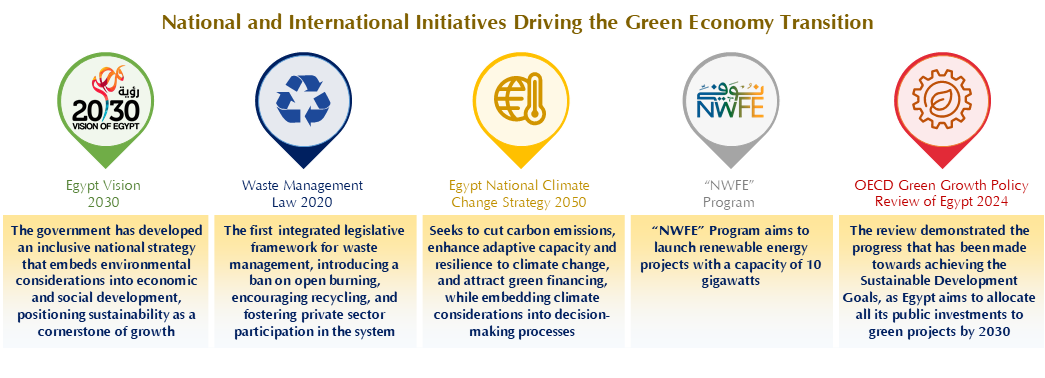
National Initiatives Driving the Green Economy Transition
Environmental sustainability is a key foundation for comprehensive and balanced development, achieved by integrating environmental considerations into development plans to achieve green and sustainable economic growth and support green projects aligned with the Sustainable Development Goals.
Source :Ministry of Planning, Economic Development
Diversifying Energy Sources & Strengthening Energy Security
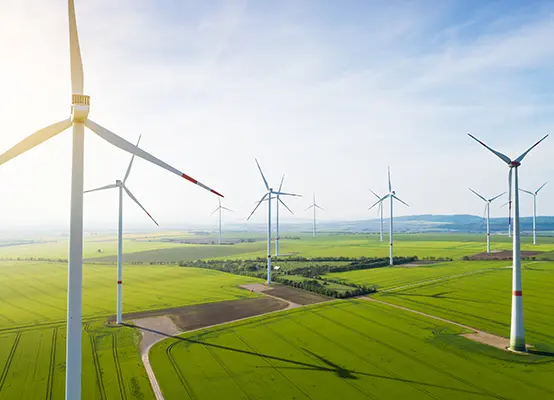
Energy is among Egypt’s most strategic priorities, given its strong link to both the economy and national security. Egypt has achieved a major leap in the energy sector, notably by diversifying energy sources and emphasizing the concept of energy security, thus reducing reliance on crude oil and lowering carbon emissions. Looking ahead, the government is targeting renewable energy to account for around 45% of the energy mix by 2028.
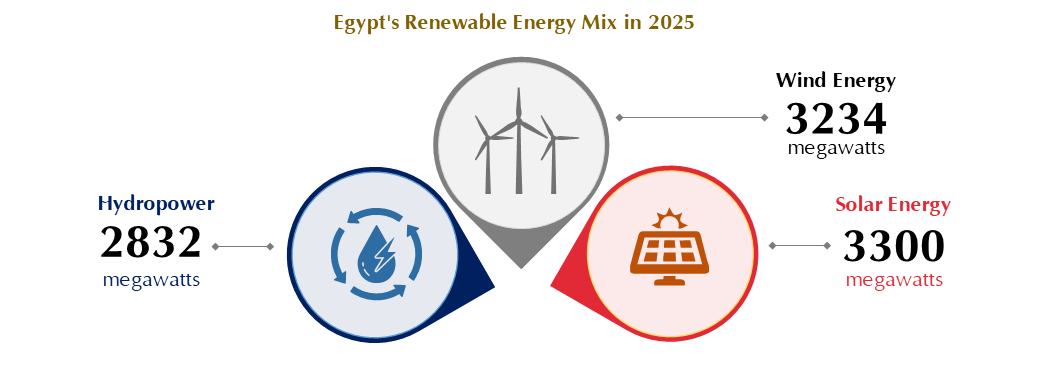
Source: Ministry of Electricity and Renewable Energy
A Wide Range of Incentives to Support Renewable Energy Projects
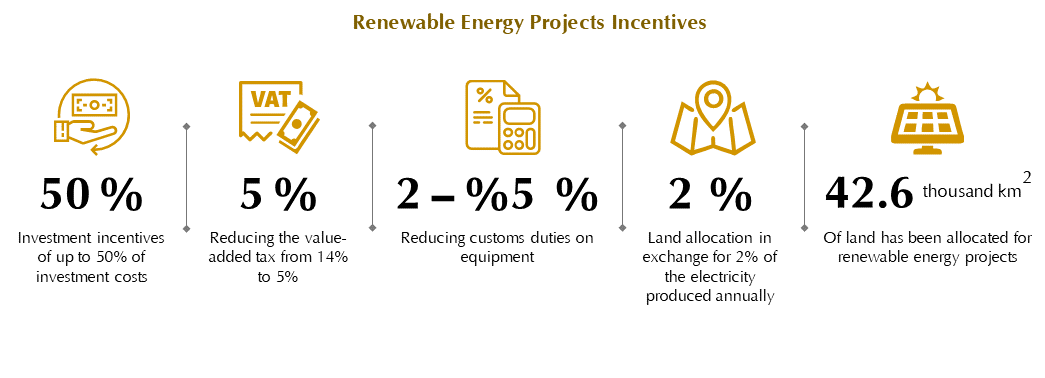
The government actively supports renewable energy projects through a set of legislative measures regulating electricity production, distribution, and consumption. Additionally, Investment Law No. 72 of 2017 offers a range of incentives, such as tax and customs exemptions, to support renewable energy projects.

Source: Cabinet Media Center - State Information Service
Renewable Energy Mega Projects
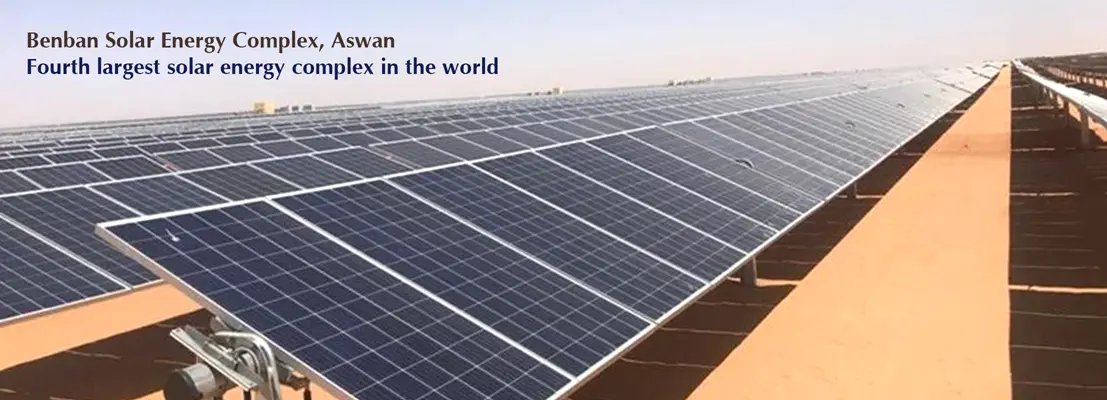
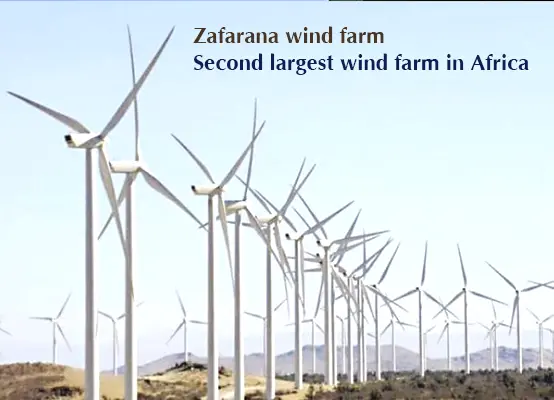
As part of these efforts, Egypt established the world’s largest solar energy complex in Benban, Aswan, comprising 31 plants with a total capacity of 1550 megawatts and an investment cost of EUR 3.4 billion. Furthermore, 14 new fourth-generation cities were established, fully powered by renewable energy.
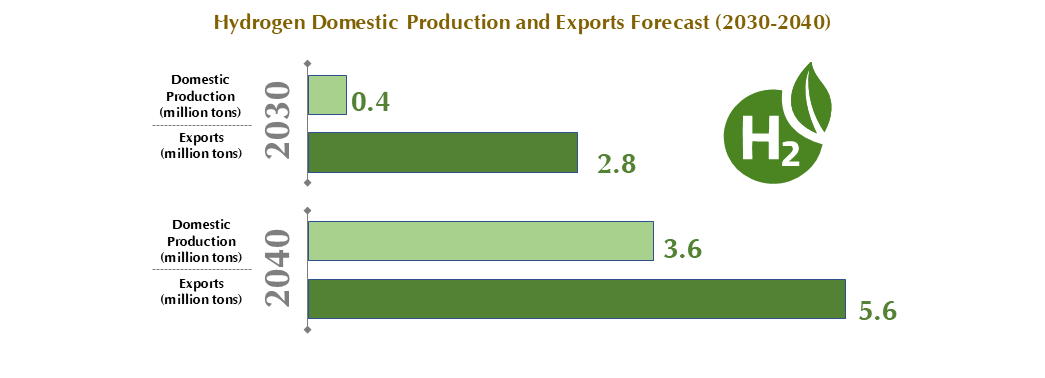
Forecasts for Domestic Production & Green Hydrogen Exports
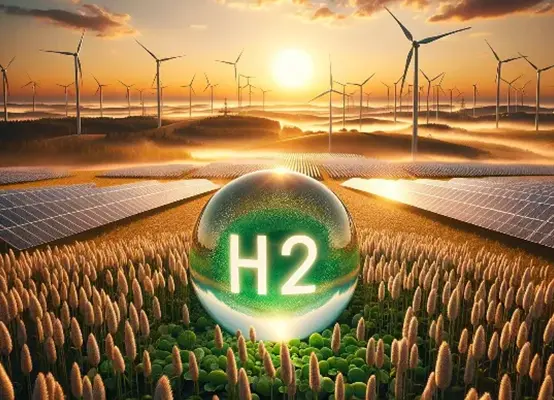
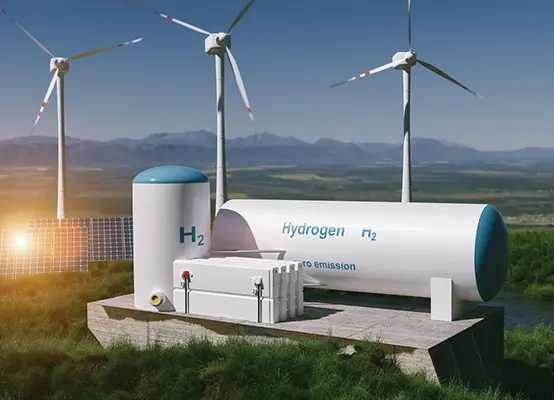
Egypt also seeks to upgrade the green hydrogen sector as a cornerstone of its shift towards a low-carbon economy. This supports the country’s efforts to expand the use of renewable energy, particularly green hydrogen, which helps cut reliance on conventional fuels and lower carbon emissions. Several procedures have been taken to promote and support green hydrogen projects nationwide, such as the Supreme Council for Green Hydrogen, that was founded in 2023, and the Green Hydrogen Strategy that was launched in 2024 to support and encourage green hydrogen projects in Egypt.
Source: EBRD Report
Incentives Supporting Green Hydrogen Projects
Law No. 2 of 2024 was enacted to govern the incentives provided for green hydrogen projects. It also applies to desalinated water production facilities that allocate not less than 95% of their output to the production of green hydrogen and its derivatives, as well as to renewable energy power plants that dedicate not less than 95% of their generated electricity to supplying green hydrogen production facilities and their derivatives, as follows:

33% - 55%
A cash investment incentive of the income tax paid on revenues generated from the project’s operations or its expansions.

30% Foreign Workers
30% Of the project’s total workforce may consist of foreign workers during the first ten (10) years following the execution of the project agreements.

Machinery Exemption
Value Added Tax exemption for equipment, tools, machinery, raw materials, supplies, and means of transportation necessary for conducting the project’s activities.

30% Reduction
Egyptian seaports grant a 30% reduction in fees and usufruct charges of fixed and floating assets, facilities, and activities involving bulk liquids and bunkering.

Exports Exemption
Exports of projects engaged in the production of green hydrogen and its derivatives are exempt from Value-added tax (VAT).

25% Reduction
Industrial lands allocated for setting up a factory to produce green hydrogen and its derivatives are granted a 25% reduction on the usufruct value.
Circular Economy and Waste Management
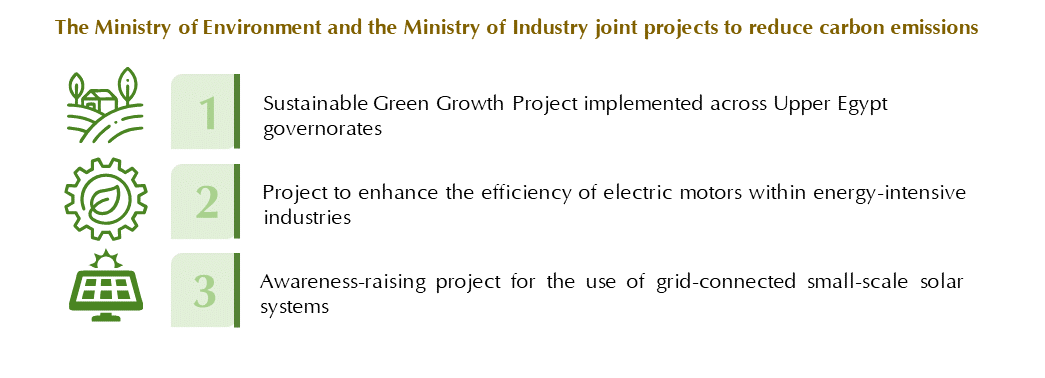
Egypt places strong emphasis on the circular economy and waste management, with the objective of minimizing resource loss, promoting reuse and recycling, and generating added economic value through innovation. This approach is consistent with Egypt Vision 2030 and the National Climate Change Strategy 2050, as well as the state's commitments to partnerships with the European Union and international financing organizations.
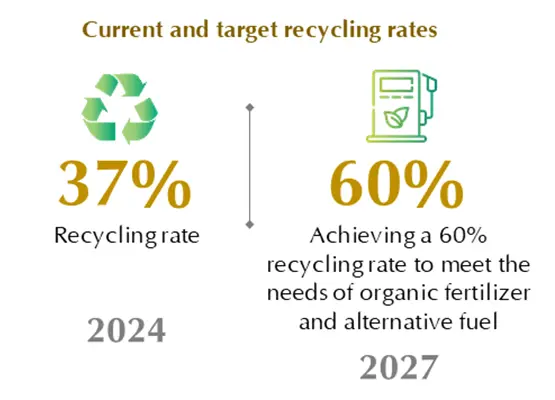
Source: Ministry of Industry , Ministry of Environment
Supporting Sustainable Green Transport Projects
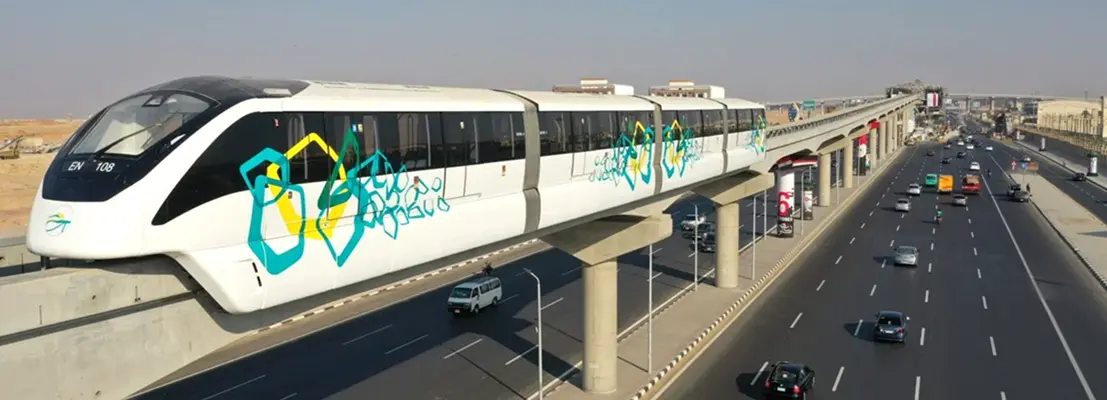
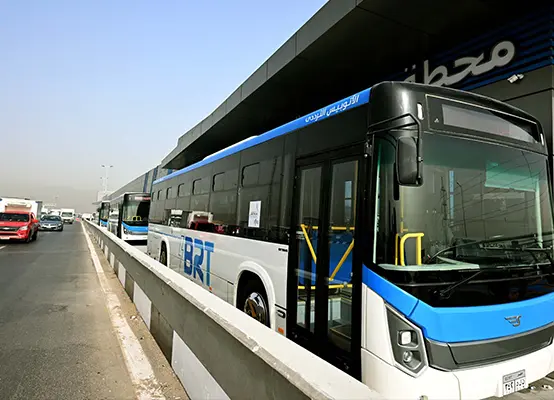
Egypt has also developed a vision for the integration and synergy of national plans for comprehensive and sustainable development, connecting national and urban planning with sustainable transportation to create new development opportunities.