

Economic Stability Drives Investment
Macroeconomic Indicators
The Egyptian economy continues to deliver positive results across key macroeconomic indicators, clearly reflecting the effectiveness of structural reforms and the growing confidence in the prospects for growth and investment"
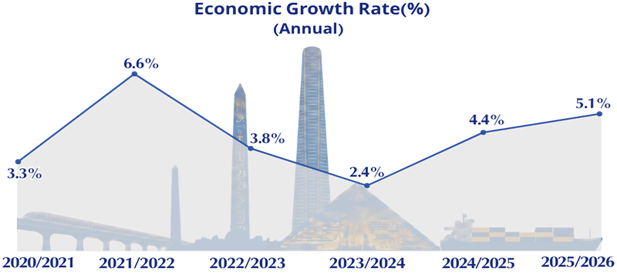
Economic Growth Rate
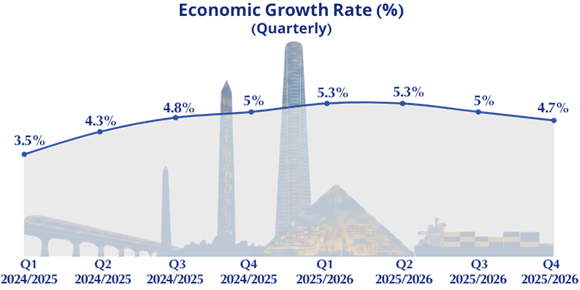
The Egyptian economy succeeded in achieving a high growth rate during FY 2025/26, reaching approximately 5.1%, compared to around 4.4% in FY 2024/25, and it is targeted to rise to about 5.4% in the FY 2026/2027. As for quarterly growth rates, the GDP growth rate reached 4.7% in Q4 of FY 2025/26.
Source: Ministry of Planning And Economic Development
Source: Ministry of Planning And Economic Development
Gross Domestic Product (GDP)
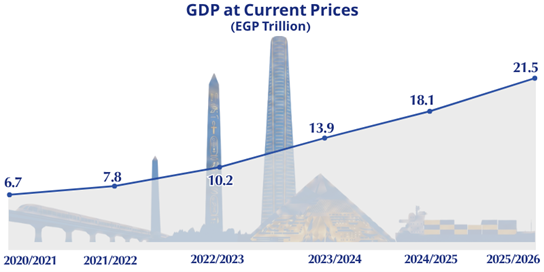
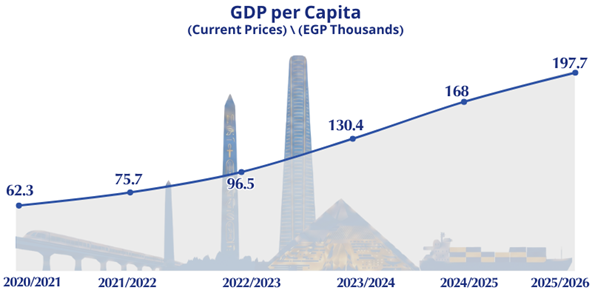
GDP at current prices rose to EGP 21.5 trillion in FY 2025/26, up from EGP 18.1 trillion in FY 2024/25. It is expected to reach EGP 24.5 trillion in FY 2026/27. The average GDP per capita increased to approximately EGP 197.7 thousand in FY2025/26, compared to around EGP 168 thousand in FY2024/25.
Source: Ministry of Planning And Economic Development
Source: Ministry of Planning And Economic Development - CBE
Sectoral Contribution to GDP
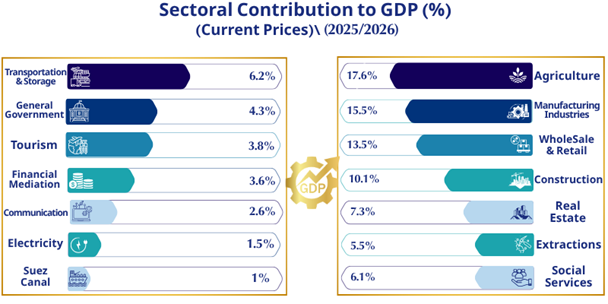
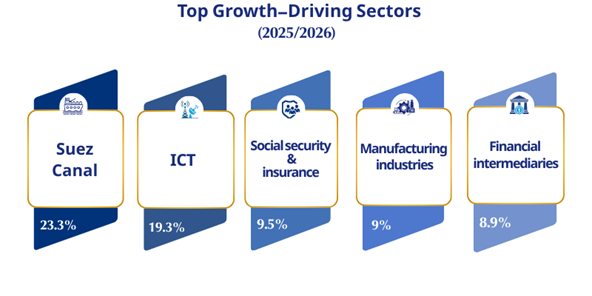
Gross Domestic Product (GDP) at factor cost (current prices), amounted to approximately EGP 20.6 trillion in FY 2025/26.The Suez Canal sector was among the sectors that recorded the highest growth rates, achieving growth of approximately 23.3% during the FY 2025/26.
Source: Ministry of Planning And Economic Development
Source: Ministry of Planning And Economic Development
Inflation Rate
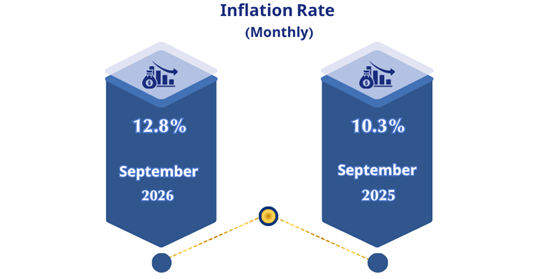
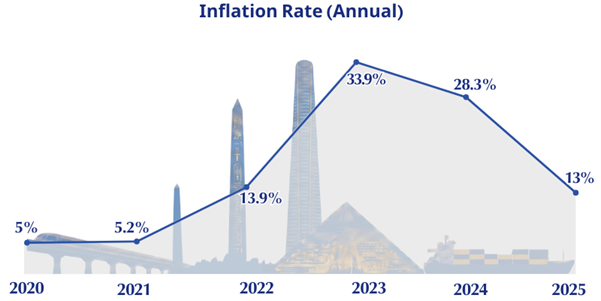
Inflation rate in Egypt reaching approximately 12.8% in September 2026 compared to 10.3% in September 2025.
Source: CAPMAS
Source: CAPMAS
Employment and unemployment
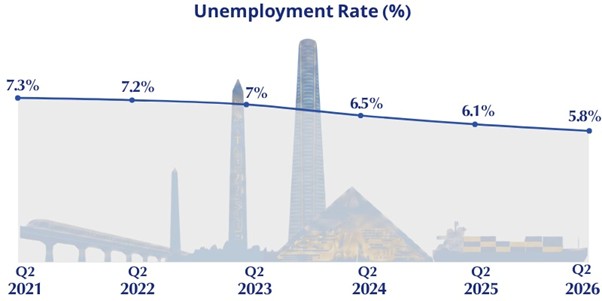
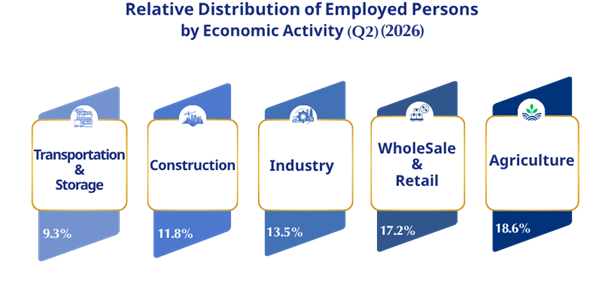
Egypt’s unemployment rate declined significantly in Q2 of 2026 to 5.8%, the total labor force reached approximately 35.6 million, of which around 33.5 million were employed and 2.1 million were unemployed. The sectors that accounted for the highest number of employed individuals during this period were agriculture, wholesale and retail trade, and industry.
Source: CAPMAS
Source: CAPMAS
Net International Reserves
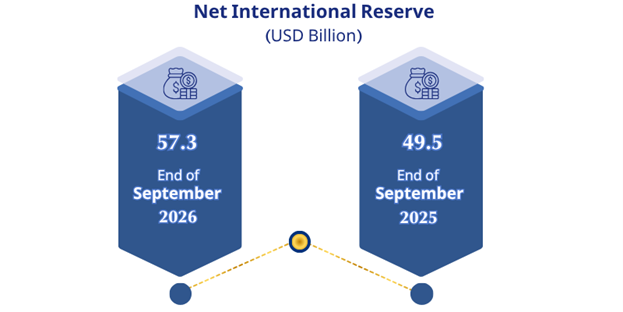
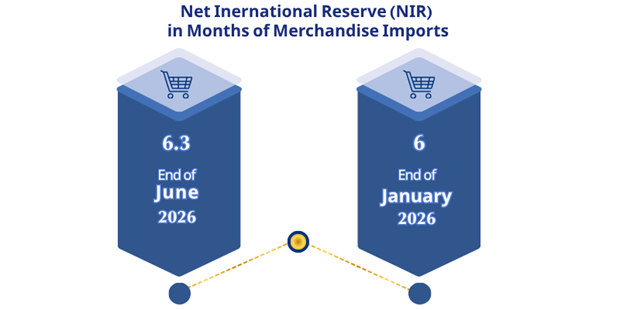
Net international reserves rose to a record high of approximately USD 57.3 billion by the end of September 2026, compared to around USD 49.5 billion at the end of September 2025.
Source: CBE
Source: CBE