

Human Power and Sustainable Resources
Natural Resources and Skilled Workforce
Egypt has abundant natural resources, with significant petroleum and natural gas reserves and diverse minerals that offer vast opportunities for mining and processing industries, supported by ample industrial land. Its fertile croplands and the Nile provide sustainable water and agricultural resources. A skilled workforce strengthens economic competitiveness, as the government prioritizes improving human resources by reforming the technical and technological education system and extending vocational training.
Petroleum and Natural Gas
Egypt's petroleum sector strategy underlies increasing production efficiency, expanding the use of natural gas as a low-carbon transition fuel, improving energy efficiency, and decarbonizing operational processes. The plan also includes expanding new energy and petrochemical projects that contribute to environmental protection, as well as producing low-carbon hydrogen and ammonia.
Electricity and Renewable Energy
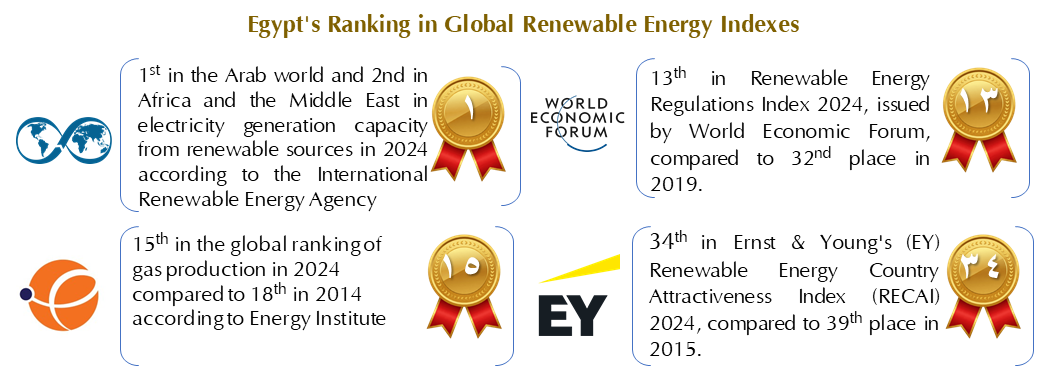
Egypt has adopted a comprehensive national energy strategy, aiming to ensure energy security and sustainability, supported by a set of reform measures and policies that have strengthened and advanced the electricity sector. The state seeks to increase the share of renewable energy to approximately 45% of total electricity generation by 2028. The total generated and purchased electricity in FY 2024/25 amounted to approximately 240.2 billion kWh, while the total consumption reached 188.9 billion kWh.
Water and Desalination projects
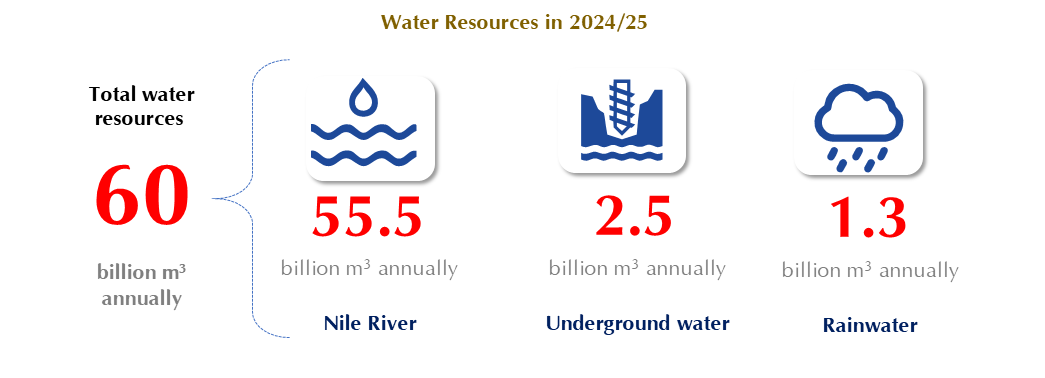
Egypt’s water resources are estimated at about 60 billion cubic meters annually, the majority of which comes from the Nile River, while rainwater and deep underground water in the desert constitute a very limited proportion of the total water resources.
Holding Company for Water and Wastewater (HCWW)
Agricultural and Industrial lands
Land suitable for agricultural and industrial purposes serves as a key foundation for Egypt’s economic development, acting as a major draw for investors and offering a diverse production base that drives growth across multiple sectors. As for the industrial sector, the state is dedicating extensive areas of industrial lands equipped with infrastructure and essential services to facilitate the establishment of small, medium and large industrial projects.

Cultivated Areas
10 million Feddans (June 2026)

Crop Area
17.5 million Feddans (June 2026)

Industrial Zones
157 industrial zones across 26 governorates (2026)

Industrial Complexes
16 industrial complexes
Highly Skilled and Qualified Workforce
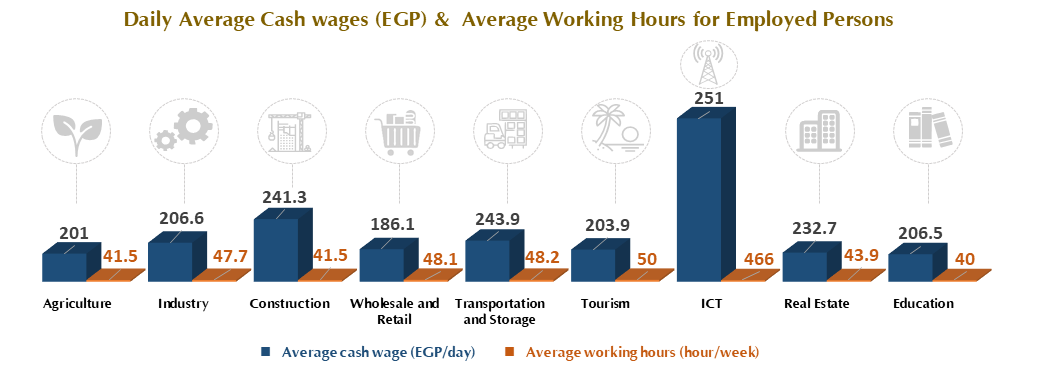
Egypt’s competitive edge in human resources stems from its capacity to offer a skilled and well-trained workforce across various sectors, combined with wage levels that remain lower than global averages.


CAPMAS – Q2 2026
Competitive wages and Working Hours
Wages are not only competitive but also tend to be more stable compared to those in rival markets, making Egypt an ideal market for investors seeking high productivity at a reasonable cost.
CAPMASS – 2025